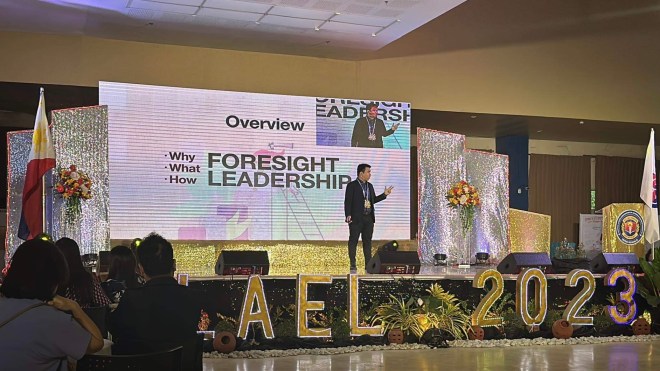
In my recent talk on Foresight Leadership during the Central Luzon Assembly of Education Leaders which was attended by almost 3000 superintendents, supervisors, principals, and teachers in Subic, Philippines, I delved into the transformative power of cultivating a mindset that transcends the boundaries of past and present, emphasizing the importance of understanding that the future can be shaped by intentional actions in the present. Foresight Leadership is not merely a process but a comprehensive approach that incorporates informed decision-making, strategic thinking, adaptability, innovation, risk-taking, humility, collaborative spirit, and a growth mindset.
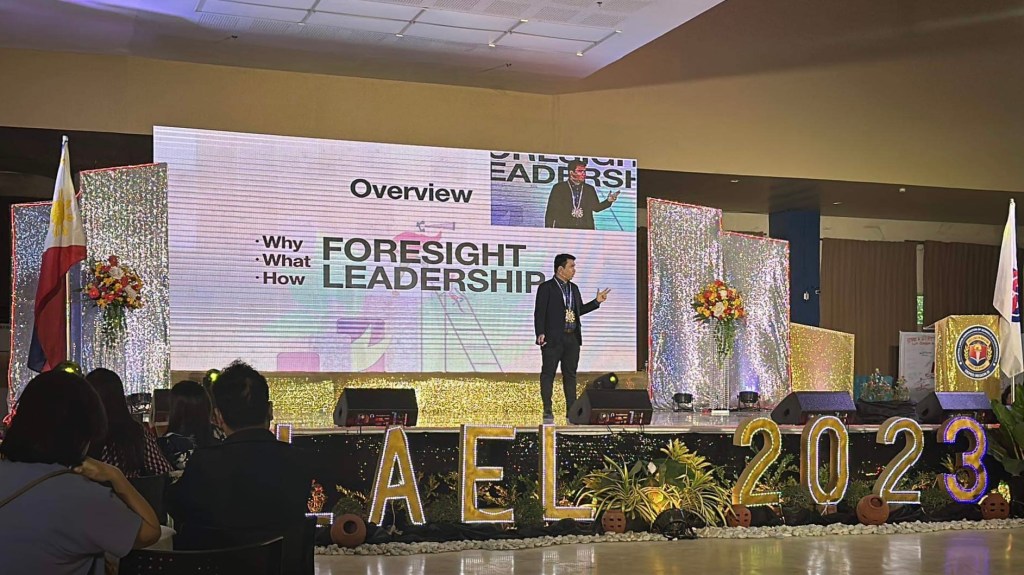
The core of a foresight mindset lies in recognizing the element of time and the need for reflection. Leaders with foresight engage in the hopeful crafting of the future while drawing valuable lessons from the past and immersing themselves in the present context. I highlighted the relevance of foresight leadership in the face of disruptive technologies, such as Generative AIs like ChatGPT.
In the evolving landscape of education, the emergence of Generative AIs, such as ChatGPT, stands as a significant disruptor, reshaping the dynamics of knowledge dissemination and content creation. These technologies, driven by artificial intelligence, have revolutionized the way information is generated and accessed. The application of foresight leadership in this context becomes paramount. Leaders must not only anticipate the challenges and opportunities these technologies present but also proactively adapt their educational strategies. The rapid evolution of Generative AIs underscores the need for leaders to cultivate a foresight mindset, where informed decision-making, strategic thinking, and adaptability play crucial roles. As education undergoes a transformative journey influenced by these technological advancements, foresight leadership becomes the compass guiding leaders to navigate the complexities, ensuring that the future of education is shaped with intention and adaptability.
To develop foresight leadership, I shared practical tips. Learning, unlearning, and relearning emerged as the first crucial step, followed by the importance of playing out scenarios from worst to best, practicing strategic thinking and risk management, embracing change and encouraging innovation, modeling collaboration, and leading with humility, acknowledging that mistakes are integral to the learning process.

In the end, Foresight Leadership emerges not only as a strategic advantage but as a holistic approach to navigating the complexities of leadership in an ever-evolving world. It is about understanding the dynamics of time, being proactive in shaping the future and fostering a continuous learning environment. As leaders embrace these principles, they not only fortify their organizations against uncertainties but also inspire a culture of innovation and resilience.
 Francis Jim Tuscano