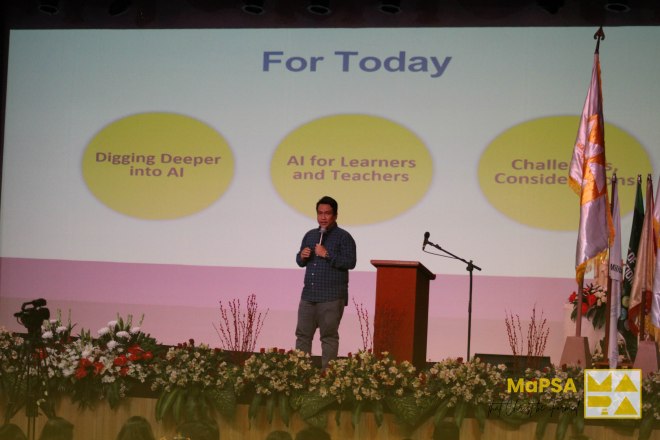
As someone deeply involved in both education and technology, I’ve been reflecting on how AI can fit into the mission of Catholic and Jesuit schools. At first glance, technology like AI might seem at odds with the values of spiritual formation and personal care that our schools hold dear. But, if we look more closely, there’s a powerful synergy waiting to be explored. Here’s how I see AI enhancing and complementing our work.
AI and Catholic Education
At its core, Catholic education is about nurturing the whole person—mind, body, and soul. AI, when used thoughtfully, can help us do just that. One of the most promising aspects is how it supports personalized learning. Imagine a classroom where every student can learn at their own pace, where the material adapts to them. AI makes this possible. It helps us tailor lessons, ensuring no child is left behind. For me, this speaks directly to the Catholic mission of recognizing the inherent dignity of each student. Each learner is unique, and AI helps us meet them where they are.
But beyond personalization, there’s a bigger picture. Catholic education has always been about promoting the common good. AI can level the playing field. In underserved communities with scarce resources, AI can provide access to high-quality learning tools and content that might otherwise be unavailable. It’s an opportunity to live out our commitment to social justice tangibly, making sure that technology serves not just the privileged but everyone.
AI and Jesuit Education
Jesuit schools have a long tradition of embracing innovation—always in the service of helping students grow into reflective, compassionate leaders. One of the pillars of Ignatian Pedagogy is reflection, and AI can support this in fascinating ways. Real-time feedback on assignments, for example, can help students pause and think about their learning, encouraging that habit of reflection Jesuits value so much. Moreover, Jesuit education emphasizes learning in context—engaging with the real world and its challenges. AI can immerse students in problem-based learning, offering simulations or real-world scenarios that make learning come alive. It’s about fostering critical thinkers who can analyze, discern, and act.
But we must always keep one thing in mind: AI should never replace the deep personal connections we build with our students. It’s there to support us, not take over. Cura personalis—care for the whole person—remains at the heart of everything we do.
Catholic Ethics and AI Use in Education
This is where the conversation about AI really comes alive for me. As educators in the Catholic tradition, we’re called to use AI in ways that honor the dignity of the human person. AI can be an incredible tool, but it must always serve human interaction, not replace it. It can help us teach more effectively, but it should never take away from the essential relationships we build in our classrooms.
We also need to confront the digital divide. Yes, AI can offer great opportunities, but what about students who don’t have access to reliable internet or devices? If we’re serious about social justice, we need to be deliberate in making AI accessible to everyone. Technology should never be a barrier to learning—it should break those barriers down.
Questions for Deeper Reflection
As we move forward, we must ask ourselves some important questions. I’d like to share a few that have been on my mind lately:
- How do we make sure AI enhances learning without overshadowing the personal relationships at the heart of Catholic and Jesuit education?
- Are we ensuring that AI tools serve all students, especially those in underserved communities?
- How do we protect the privacy and dignity of students in an AI-driven environment?
- How can AI help us promote the values of compassion, reflection, and action—so central to the Jesuit tradition?
As educators, it’s our responsibility to reflect deeply on these questions. AI offers incredible potential, but it’s up to us to ensure it serves our mission of forming individuals who are not just learners, but people for others—compassionate, critical thinkers who will go out and change the world.
These are exciting times, and I believe AI has a place in our classrooms. But as always, it’s not just about the technology—it’s about how we use it to continue the work of educating with heart and purpose.
 Francis Jim Tuscano