A few months ago, I was wrapping up a workshop with a group of teachers somewhere in Visayas. It had been a full day — tools, demos, use cases, AI prompting strategies. Good energy in the room. Excited educators ready to apply AI learnings and skills to reclaim and save their weekends from heavy school workload. But as we were closing, one teacher raised her hand and asked quietly: “Sir, in all of this, where is the student?”
I didn’t have a clean answer. And that stayed with me.
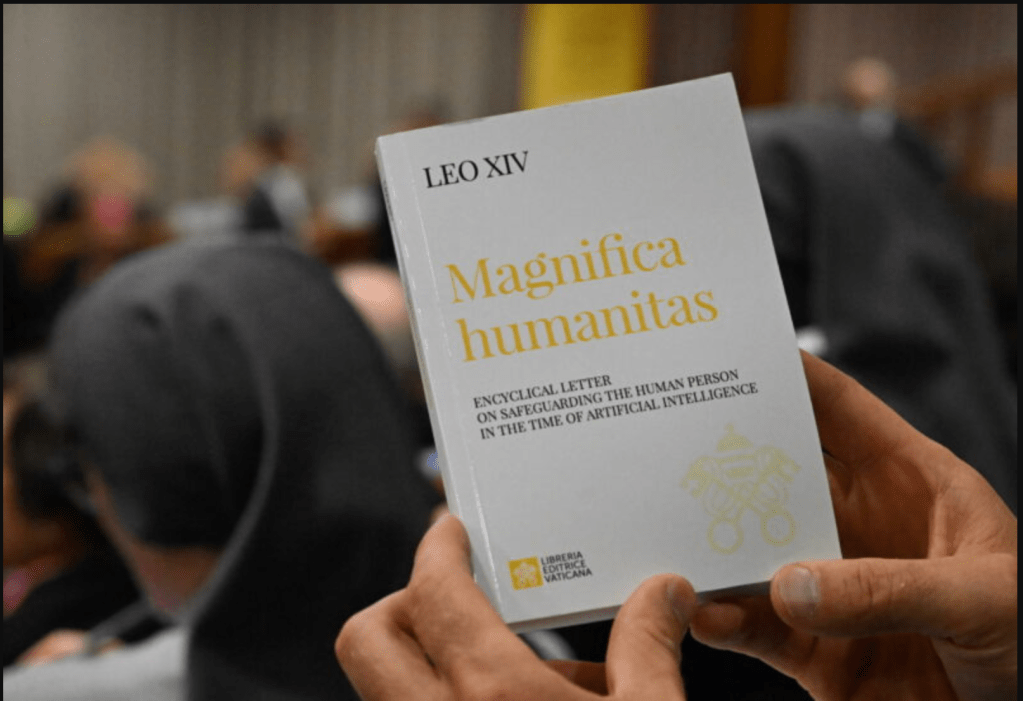
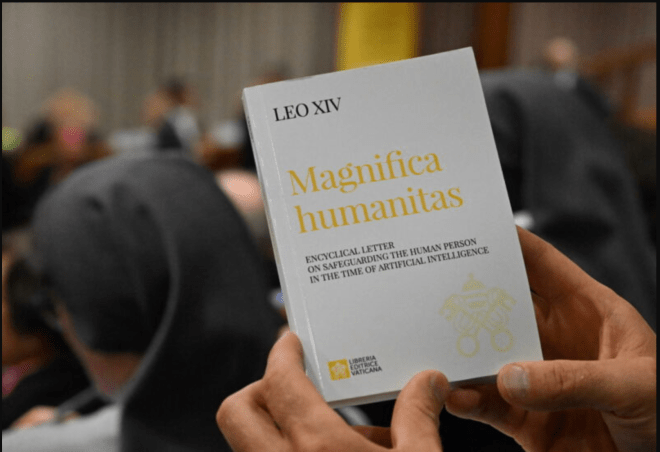
I just recently read Magnifica Humanitas, the first encyclical of Pope Leo XIV, released this May, and that moment came back immediately. Because the Pope opens with almost the same question. He borrows it from St. John Paul II: Does this make human life more human? More worthy of the person?
That’s it. That’s the question. And if I’m being honest, it’s not the question I lead with when I walk into a school to talk about AI. I usually lead with: What can AI do? How do you use it responsibly? What does good integration look like? These are not bad questions. But they are second questions. The first question, the one that should shape everything else, is about who our students are and what we believe they are becoming.
We are, in many ways, in a rebuilding moment. Not because everything we built was wrong, but because the world our students are growing up in has shifted faster than our structures have. The pressure to respond has been real and relentless. And I understand it. Schools are hearing it from parents, from leaders, from students who are already using these tools whether we’ve planned for it or not.
But here’s what I’ve been noticing in the schools I work with: the ones that moved fastest into AI adoption are often the ones now backtracking, not because the tools failed, but because they never stopped to ask what they were adopting AI for. They have platforms, subscriptions, and policies. What they don’t always have is clarity on the deeper question.
Speed without direction is just movement. And in education, movement without meaning has a cost.
Magnifica Humanitas is a call to slow down enough to answer the first question before acting on the second. Not to reject AI. Not to be afraid of it. But to be genuinely clear about what our schools are for before we decide what role technology plays in them.
The encyclical uses the image of Nehemiah, a leader who walked the ruins of Jerusalem in silence before organizing any rebuilding. He didn’t arrive with a plan already made. He looked first. He listened. He understood what was broken before deciding what to build. That’s a good model for school leaders right now.
What is this part teaching me?
That I need to walk into every school conversation about AI with the anthropological question on the table first. Not as a philosophical exercise. As a practical one. What kind of human beings are we trying to form here? And does what we’re doing, with or without AI, actually serve that?
Here are three places to start:
Hold a “why before what” conversation. Before the next technology decision, ask your team: What does flourishing look like for our students? Let those answers be the filter for everything that follows.
Do an honest audit of the slow things. Are students still doing sustained reading, extended writing, unstructured reflection? If these have been quietly crowded out, that’s the first rebuilding priority — not another app.
Open one meeting with the question. Just try it: “What does it mean to remain human in the work we do — and to help our students remain human in the world they’re growing up in?” See what surfaces.
The rebuilding starts when we stop long enough to know what we’re rebuilding for.
That teacher in Visayas was asking the right question. I want to make sure I’m always asking it, too.

